
The CIDX Project
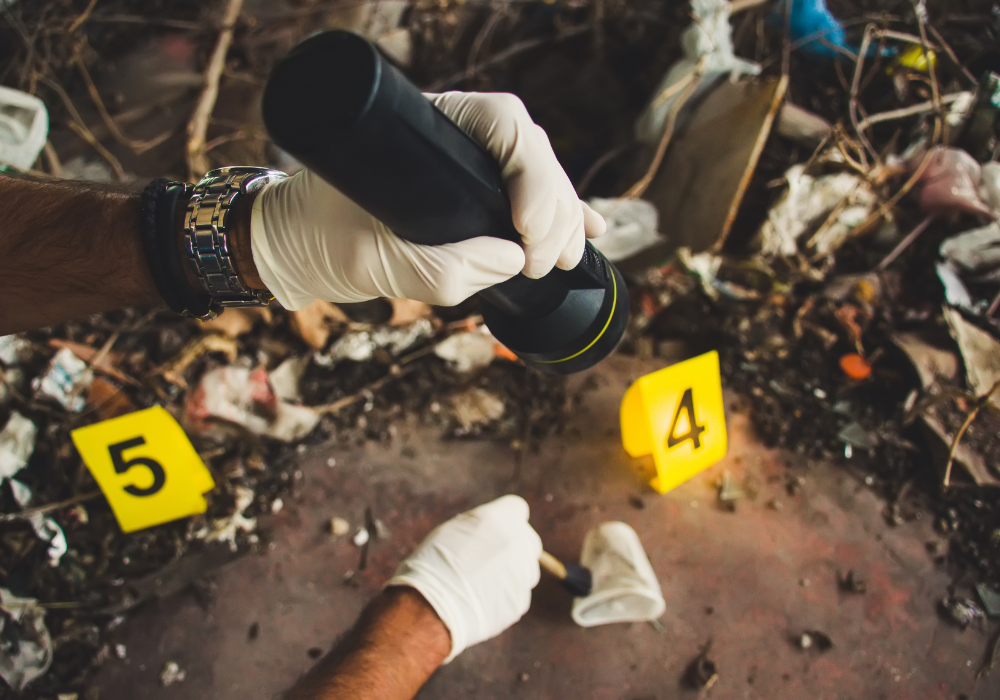
The CIDX project is a research initiative funded by NWO, in which 19 organizations collaborate with the goal of developing, testing, and validating two new technological innovations for application at crime scenes. These innovations aim to directly contribute to public trust in our legal system and the safety of our society. One of the innovations involves rapid tests to determine whether sufficient DNA material is present in a trace, ensuring that no samples are sent to forensic labs that yield “no result” due to insufficient DNA material. The other innovation focuses on rapid tests that can extract information from human biological traces, such as determining whether the trace belongs to a male or female, helping to guide on-site investigations more quickly and effectively.
This project is financially supported by the Dutch Research Council (NWO) through the Research along Routes by Consortia program under the National Science Agenda (NWA-ORC).
Desired societal change and objectives
The consortium wants to contribute to the improvement of societal security, increasing citizens’ trust in law enforcement and related sense of security by gearing the project to help solving more criminal cases, solving them faster and with a reduced chance of flaws. This is realized by improving the efficiency and effectiveness of the criminal justice chains. The project not only focuses on technological and scientific objectives but also on integrating the developed innovations into practice, involving the entire criminal justice chain. Public engagement is ensured through the inclusion of a media partner, who will inform citizens (for instance, through a true crime documentary), allowing them to form their own opinions.
The CIDX project partners
The CIDX consortium consists of 19 different entities, comprising (technical) universities, a university medical centre and a university of applied sciences, the Police Academy, the Netherlands Forensic Institute (NFI), industrial partners and the entire criminal justice chain. These represent the key stakeholders, micro-/nanotechnology, lateral flow assays, (forensic) DNA analysis, biochemical assay development, biosensors, criminology and application of technology in forensic applications, which are required for succesful execution of the project.
Research
Several research groups from various institutes join forces to develop knowledge, expertise and technology that is key for what is set out to achieve. These include Saxion University of Applied Sciences, University of Twente (UT), University of Wageningen (WUR), the AmsterdamUMC (AMC), Vrije Universiteit (VU), Police Academy and the Netherlands Forensic Institute (NFI).
SMEs and industrial partners
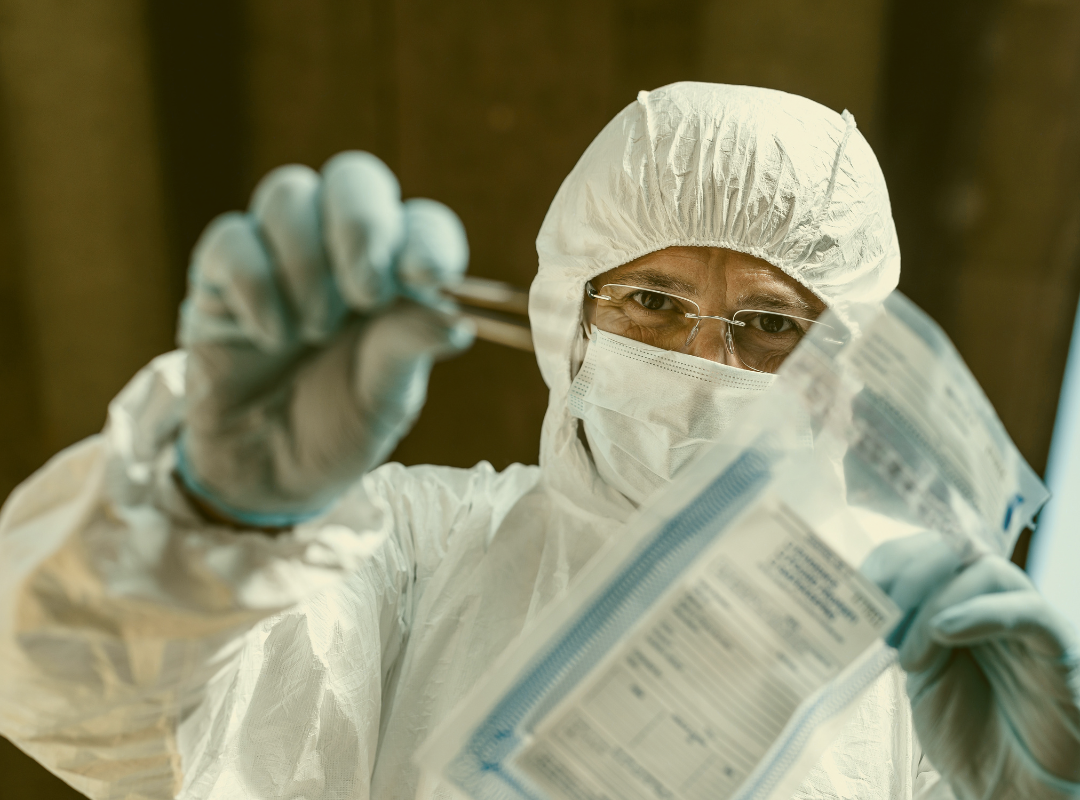
Researchers from the different universities and knowledge institutes work closely together with a number of SMEs and industry partners. These include Micronit, Nytor, D’Andrea & Evers Design, Salvitat, Benchmark, Beleef!Media, Novel-T, Twinx and Pervatech. These combine high tech knowlege and expertise, communication experts, business development and project management.

Criminal justice chain
End users within the forensic domain must be able to use practical tools, receive analysis results that are as reliable and impartial as possible, and understand how to handle these results. For this reason, training is being developed and provided to end users on both the technology and the legal foundations. The entire criminal justice chain is involved in the project to ensure the usability of the innovations in legal proceedings.










Impact pathway
The so-called ‘impact pathway’ is part of the Theory of Change and schematically represents the route towards societal impact. It is a visualization of the proposed process of change resulting from the implementation of the project. The pathway illustrates this process, starting from the direct results of the project (output), through the direct and indirect effects of these results (outcome), and leading to long-term impact. This provides a simplified representation of the societal impact the consortium aims to achieve and the route to get there.
Output
- Requirements for rapid LFA test devices
- Protoypes of rapid LFA test devices
- Requirements for microfluidic test devices
- Prototypes of microfluidic test devices
- Training program for stakeholders
- Educational content
- Decision support systems for investigators
- Working methods for stakeholders
- Media content
- Novel academic insights
Work packages
The project activities are structured in the work packages below.